3D opened the door, but it was never the destination
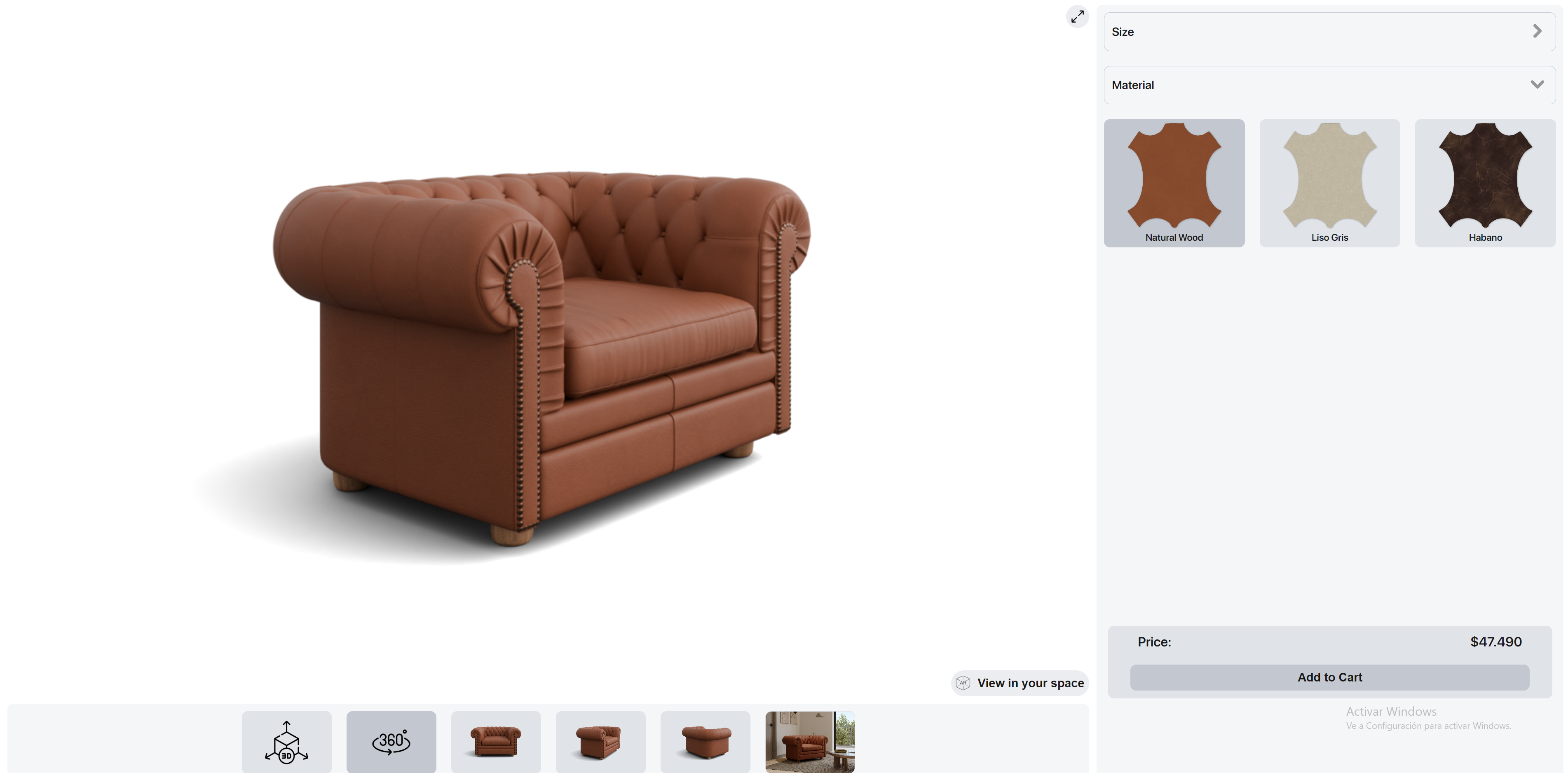
Adopting 3D was a turning point for many brands. Suddenly, products could be rotated, customized, explored in detail and even visualized inside real spaces through augmented reality. Configurators, 360° viewers and AR experiences transformed the way customers interact with products online, especially in categories like furniture, architecture, home and design. For a while, that was revolutionary.
But as digital commerce evolved, something fundamental became clear: having 3D assets is no longer enough.
Where most teams start to break down
The real challenge isn't creating a 3D experience — it's scaling visual content across the entire business. Marketing teams need visuals for ads, social media and campaigns. E-commerce teams need PDP imagery that updates with every configuration. Sales teams need tools that help customers decide faster. Retail needs visuals that work both online and in physical stores.
So what usually happens?
- Visuals are recreated over and over for different channels
- 3D assets live in one place, while marketing images live in another
- Updates are manual, slow and inconsistent
- 3D work stays trapped inside a single viewer
The result is high effort, duplicated work, and visuals that can't keep pace with commerce today.
The mindset shift: from visual experiences to visual infrastructure
At Ardata, we believe the future isn't about adding more tools — it's about building a connected visual foundation. That's why Ardata isn't just a 3D viewer or an augmented reality feature.
It's a visual content system designed to:
- Centralize product visuals
- Generate multiple outputs from a single source
- Adapt instantly to changes in products, materials and configurations
- Serve e-commerce, marketing, sales and retail at the same time
Instead of creating visuals channel by channel, brands create visuals once and deploy them everywhere.
One product, infinite visual outputs
With Ardata, a single product model becomes the engine behind:
- Interactive viewers
- Customizable configurations
- True-to-scale AR experiences
- Marketing visuals and scenes
- Sales tools for physical stores
Materials, colors, modules and dimensions stay connected. When a product evolves, its visuals evolve with it — automatically. That's what allows brands to move faster without sacrificing accuracy or consistency.
Why this directly impacts conversion
When visuals are treated as infrastructure and not as decoration, everything changes:
- Customers understand products better
- Purchase friction goes down
- Returns are reduced
- Teams launch faster and with greater confidence
Instead of static images trying to explain complex products, customers experience them. And instead of rebuilding assets for every campaign or update, teams can focus on growth.
Augmented reality as a natural extension, not a gimmick
Augmented reality shouldn't be an isolated feature. At Ardata, AR is simply another output of the same visual system. Customers can customize a product, see its real dimensions and place it in their space directly from the browser — no downloads, no apps. It's a seamless, practical experience built for real purchase decisions.
What's next for visual commerce
The question brands should be asking today isn't: "Are we using 3D?"
It's: "Can our visual content scale as fast as our business?"
As channels multiply and expectations rise, isolated tools get left behind. The brands that understand visual content as a flexible, connected and reusable system will be the ones that lead.
Final thought
3D changed the way products are shown. Ardata changes the way visual content works. When visuals are designed to support every channel, team and customer touchpoint, they stop being a bottleneck and become a real growth engine. If your visual content is still fragmented, it may be time to rethink the system behind it.